

KIMIN
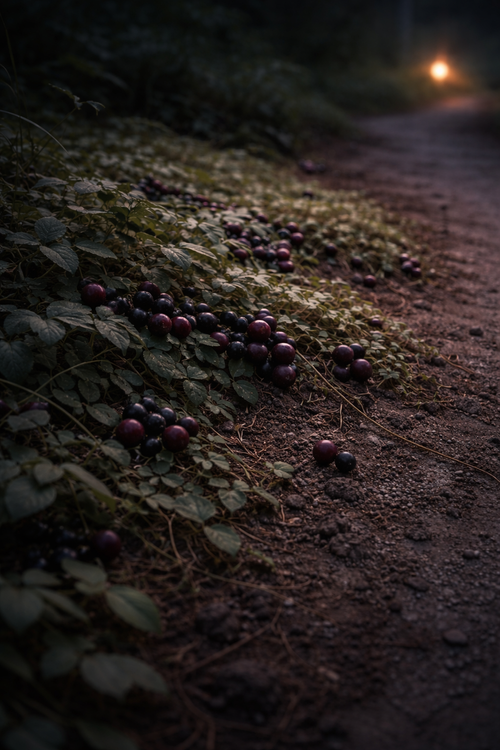
Kimin is a low-growing fruiting vine found across Dhuma’s quieter pathways, field edges, and lightly managed wild zones. It spreads close to the ground in soft creeping mats, producing small berries in dusky tones of plum, black-purple, and muted wine that sit low among the leaves and dark soil.
Though modest in appearance, Kimin plays an important role in both daily life and the broader ecosystem of the realm. Its fruit is gathered for preserves and desserts, while fallen berries also feed small wildlife, making it one of Dhuma’s clearest examples of a flora shared between cultivated use and natural balance.
FIELD RECORD
Realm-native low fruiting vine adapted to dim ground conditions and lightly cultivated edges throughout Dhuma.
Dhuma
Flora
- Creeping ground vine with fine stems and rounded leaves
- Small berries in dark plum, black-purple, and wine tones
- Low clustered growth hugging the soil closely
- Fruit with subtle sheen when fully ripened
- Commonly found where daily travel and wild growth overlap
Kimin spreads outward in low mats rather than climbing, favoring roadside edges, field margins, and quiet areas where the ground remains cool and lightly damp.
Gathered for desserts, preserves, and sweet preparations. Also serves as a shared food source for smaller wildlife within Dhuma’s lowland ecosystem.
Harvested when the fruit deepens fully in color and softens slightly on the vine. Ripening tends to occur in steady waves rather than one brief abundance period.
Most often found along the Sable Road, at the edges of cultivated land, and in calm low-growth areas where human pathways and wildlife movement meet.
ARCHIVAL NOTE
Kimin is not a grand or imposing flora, but it is woven quietly into the daily life of the realm. Its value lies in accessibility, flavor, and continuity. It appears where people walk, where animals pass, and where the land is allowed to remain useful without being overworked.
For that reason, Kimin reflects one of Dhuma’s more understated strengths: the ability of the realm to sustain life through layered, modest abundance rather than spectacle. It belongs equally to kitchens, pathsides, and the wider living system around them.